
A week is a long time in AI boosterism, bubbles and so on...
1. The people versus the ugly big boxes
You might have noticed there was some kind of election in the US. Voters treated the big greedy sheds that keep the chatbots running as a claim on power, water and the skyline, backed by billionaire money. Unsurprisingly to everyone except the billionaires, this did not end well for them.
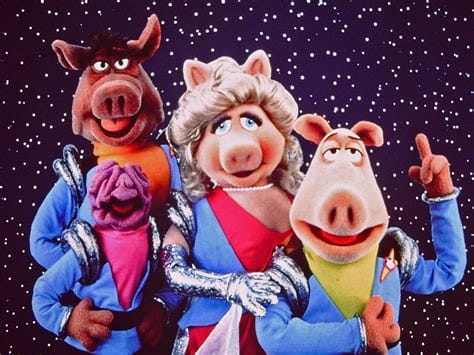
So now Elon and the gang are looking at the stars and wanting to move datacentres off the planet. I can't help but remember the Straylight Run, from Neuromancer. Once again, the super-rich techbros seem to be treating the Sprawl Trilogy as a handbook for future living, rather than a dystopia.
2. You don't like this plan? How about this other plan? Monkey tennis?
Casey Newton argues the election has given Democrats a mandate against data centres, billionaire election-buying and AI accelerationism, but they risk repeating the social-media years: no coherent goal, no fallback when legislation stalls, and advocacy groups working in silos.
Being against data centres is not the same as knowing what role AI should play in human life. Performative fury at Zuckerberg -- who deserves a lot more than performative fury -- produced a TikTok ban nobody enforced and no privacy law at all. Congress does not have a decade to have the same argument twice.
3. What do you mean, Twitter isn't real life?
Matthew Gault describes an online right posting AI Anakin and “Malfoid” memes before an electoral wipeout. This left Steve Bannon whispering “that can’t be right” at exit polls showing losses among young men.
This is something that the British political class, both politicians and commentators, would do well to learn. X is not real life. Republicans found out you cannot meme-magic your way past six-dollar diesel, and the algorithm that told Trumpworld they were winning was just showing them to themselves.
4. I'm sure it was the black leather jacket that attracted her
A US intelligence assessment alleges that Alice Huang, an executive at Nvidia customer Megaspeed, was recruited by China’s Ministry of State Security to gather intelligence on Jensen Huang. The FT also reported an alleged romantic relationship between the two. Nvidia describes the contacts as “not unusual” and says it does not share classified information with customers.
But then I guess the Chinese Communist Party wouldn't technically be a customer, would it? Not that Nvidia did anything of the sort, of course.
5. The missing link
I have nothing but praise for Apple for its Advanced Data Protection system, which is encrypted in such a way that even Apple can't access your files. This is basically Proton-esque encryption for the rest of us (as long as you're not a new user in the UK).
But from iOS 27.3, Apple will start checking material shared using “Anyone with the Link” for “harmful content”. That sharing mode already sits outside ADP’s end-to-end encryption.
This sounds like a good way to combat shared content which falls into the illegal bucket, primarily (of course) child sexual abuse material (CSAM). But there are two problems with this.
The first problem is that systems like this easily end up with entirely innocent people being flagged, reported to the police and having their accounts permanently banned. And while they might ultimately be cleared, the company itself has no requirement to reinstate their accounts.
That's bad enough if you lose just an email address. But with platforms like iCloud, you would also be losing access to your documents, your password, your photos, your music, your purchased movies, and a lot more. Platform owners love it when you have all your services in one basket -- theirs -- but it also gives them a huge measure of control over your life.
The second issue is that notion of "harmful content". In the UK, we have just enacted a well-intentioned but pointless law banning porn content which depicts suffocation. This, of course, could include face-sitting, a practice where dominant women... well you get the idea. If I were to share such content with someone in the civilised world, would that count as "harmful content"? Would video footage of atrocities in Gaza count as harmful? Would content shared from Nigeria encouraging the idea that being gay might not be a terrible thing be banned, given that it's illegal there?
We don't know, and Apple -- of course -- won't say.
6. When the token bill comes due, someone has to pay
“Tokenmaxxing” meets an actual invoice. Bloomberg reports engineering teams’ daily AI allowances falling from $300 to $200, with some potentially heading to $100 and non-engineering staff facing $25 limits.
Budget cuts like this don’t establish that AI isn’t productive, but they do puncture the idea that more usage is automatically better. Even Apple wants someone to explain what it is getting for the money.
7. Temporarily embarrassed founders
Cory Doctorow reviews a book by two veterans of tech union campaigns, JS Tan and Clarissa Redwine. Scarce tech workers once had bargaining power, but many saw themselves as founders-in-waiting. Once supply caught up, bosses switched from hoodies-and-family to labour war.
The truth is that the scarcity dividend is over and the bosses have remembered they are bosses. The useful question is what organising looks like when workers no longer believe they are one funding round away from joining the other side.
8. What have you got to hide?
One of my absolute favourite companies is Information Architects (iA), makers of iA Writer, and this post exemplifies why. In it, Oliver Reichenstein discusses EU AI transparency requirements, text watermarking and detectors that accuse human writers of actually being machines. iA’s alternative is to let writers identify exactly which words came from a model, much as they would identify a quotation.
This feels like a much more human approach. Stapling more AI onto AI to catch AI turns reading into a policing exercise, and the more useful approach is disclosure. If you used a machine, show your working. Generated prose becomes something a reader can assess, rather than something a detector claims to sniff out.
9. Goodbye Salon!
After 31 years, Salon, the publication that helped establish web magazine journalism in 1995, says it is ceasing publication because its business model is “no longer sustainable”.
Salon launched when the web still thought it might be a republic of letters rather than a traffic farm. We're heading into a very different world for publishers, one where even SEO tricks and endless explainers can't deliver enough traffic to make advertising a viable way of paying the bills.
10. Ninety-two ways to avoid hollowed out names
Enshittification is not just a software story. Sometimes the thing you recognise is a logo, while ownership, manufacturing, the quality of the product and the warranties have changed underneath it.
The Brand Ledger is a public list which marks 92 brands “Avoid”, examining names affected by licensing companies and private equity. That includes the likes of Craftsman, Pyrex, Dr. Martens and Ray-Ban. Treat this as a useful research lead rather than assuming every entry has the same ownership story or evidential strength.